

Listing a rental property in Washington, DC feels straightforward at first glance. Take photos, set a price, post it online, wait for inquiries.
That version of events exists. It just tends to fall apart quickly in DC.
Because this is one of those markets where the gap between “ready to list” and actually being ready is wider than expected. Regulations, documentation, timing, expectations, even small administrative steps, they all carry more weight here than in most places.
For landlords trying to understand what Washington DC landlords must do before listing a rental property, the goal is not perfection. It is avoiding the handful of mistakes that create problems later. Usually at move-out. Sometimes during the lease. Occasionally right after move-in.
Here is what actually needs to happen before that listing goes live.
Make Sure the Property Is Legally Rentable
This sounds obvious. It is also one of the most common blind spots.
Every rental unit in Washington, DC requires a Basic Business License (BBL) before it can be legally rented. This is not optional, and it is not a formality. The DC Department of Licensing and Consumer Protection (DLCP) oversees this process, and their step-by-step guide is worth reviewing before getting started.
Part of the BBL process involves a Department of Buildings inspection of the home. If the property fails that inspection, the owner receives a checklist of items that need to be corrected before a license can be issued. You can review the standard BBL inspection checklist here to understand what inspectors are looking for.
For properties with two or more units, including homes with a separate rentable English Basement apartment, a Certificate of Occupancy (CofO) may also be required in addition to the BBL. A CofO is generally not needed for a single-family home, a single condo unit within a larger building that already holds a CofO, or a co-op. This is an area where landlords frequently assume a BBL alone is sufficient, which can create significant legal exposure.
Skipping or shortcutting these steps does not just create administrative friction. It can create real legal exposure if something goes wrong with a tenant. Having your licensing in order and in good standing is required to start an eviction process, if needed.
This is part of the broader category of Washington DC rental laws for landlords, where compliance is not optional in the way some owners assume. The city enforces these rules more actively than many expect.
Get the Property Inspection Done Properly
Move-in inspections tend to be treated casually until they are needed as evidence. By then, it is too late.
Before listing, the property should be in a condition where a full inspection can be documented accurately. That includes a visual inspection of appliances, checking fixtures, confirming smoke and carbon monoxide detectors are working, checking your fire extinguisher status, and noting any existing wear, among other items.
This connects directly to DC rental inspection requirements before move-in, which are not just about checking boxes. They are about establishing a baseline that protects both parties later.
A rushed or incomplete inspection report tends to show up months later as a dispute over damage that no one can prove.
Understand the Rules Around Security Deposits
Security deposits feel simple. Collect one month’s rent, hold it, return it with deductions if necessary.
In DC, it is much more structured than that.
There are rules about how deposits are held, how interest is handled, and how deductions must be documented and communicated. Missing a step does not always cause an immediate issue, but it can make enforcement difficult later.
This is where understanding DC security deposit rules for landlords matters. Especially before listing, because how the deposit is handled should be explained clearly in the lease and aligned with the inspection process.
It is all connected. More than most landlords expect at first.
Understand DC’s Rent Control Rules, And Whether You’re Exempt
Rent control is one of the most consequential and least understood aspects of renting in Washington, DC and it deserves attention before a property is listed, not after.
DC’s rent control laws apply automatically to most rental units, unless a valid exemption is claimed and properly registered. They govern how and when landlords can increase rent, which directly affects long-term pricing strategy. However, exemptions do exist. Newer construction (generally buildings first rented after 1975) and small landlords (those who own four or fewer rental units in DC individually) may qualify for an exemption, though the specifics matter and the process for establishing that exemption has its own requirements.
One area that trips up owners frequently: placing a rental property into an LLC. Many landlords do this for perceived liability protection. In DC, this can be a significant mistake. An LLC-owned property may no longer qualify for the small landlord exemption from rent control, automatically subjecting the property to rent control restrictions. A landlord insurance policy typically provides similar liability protections without that consequence and is generally the better path for DC rental owners who want to preserve their exemption eligibility.
Getting this right before listing affects pricing, lease structure, and long-term investment strategy. It is not a step to sort out later.
Know What Disclosures and Forms Are Required at Lease Signing
A lease agreement is necessary. In DC, it is not sufficient on its own.
DC law requires landlords to provide tenants with a specific set of documents at or before lease signing. This includes lead-based paint disclosure forms, tenant rights documents, and other regulatory notices. These are not suggestions. Failing to provide required disclosures can limit a landlord’s ability to enforce the lease later and can create legal exposure down the line.
Private landlords who are accustomed to other markets, or who have relied on generic lease templates, often discover this gap at exactly the wrong moment. Putting together a complete documentation package before listing, and making it part of the standard lease signing process, avoids that problem entirely.
Price the Property Based on Current Conditions, Not Memory
This is one of the more subtle mistakes.
A unit that rented quickly last year at a certain price feels like it should rent at the same price again. Sometimes it does. Sometimes it sits for weeks.
DC rental demand shifts by neighborhood, season, and even building type. A price that is slightly off can extend vacancy longer than expected.
Before listing, it helps to look at comparable units that are currently active, not just what closed recently. What is leasing right now tells a more useful story than what leased three months ago.
Property managers often step in here because they see pricing patterns across multiple properties. Individual landlords tend to rely on fewer data points, which can lead to slower adjustments.
Prepare the Property for Marketing
Before listing, it helps to think through how the home will be used and what features will matter most to prospective renters. That might include small upgrades — like updated lighting or fresh paint — or ensuring all maintenance items are fully resolved before photos are taken and showings begin.
Properties that are in clean, move-in ready condition tend to attract more serious inquiries and lease faster. Taking care of deferred maintenance before listing also reduces the chances of issues surfacing during a tenant’s first few weeks, which sets a better tone for the relationship overall.
Make Sure Your Screening Criteria Complies with DC Law
Tenant screening in DC is an area where well-intentioned landlords frequently run into trouble, sometimes without realizing it until a fair housing complaint arrives.
DC has strict rules about how applicants can be evaluated and what can be used as a basis for denial. A few of the most common mistakes:
- Housing vouchers: Landlords in DC cannot refuse to accept applicants with housing vouchers (also known as Section 8). Source of income is a protected class under DC law. Landlords may not impose different criteria for voucher-holders.
- Application fees: Fees are capped at $50 under DC law.
- Eviction records: Landlords need to be cautious using eviction records. Non-judgement filings and older cases may be restricted or create fair housing risk, and reliance on them should be limited and consistent with current DC guidance.
- Criminal records: Certain criminal history, particularly records unrelated to suitability as a tenant, cannot be used in screening decisions.
- Credit: Adverse actions cannot be based solely on a lack of credit history or a low credit score. Credit can be considered, but policies must be applied consistently and cannot have a discriminatory impact or unfairly disadvantage protected classes.
- Pet deposits: Charging a separate pet deposit in addition to the maximum security deposit (1-month’s rent) is not permitted under DC law.
It is also worth noting that listing language matters. Ads that specify minimum credit scores, exclude voucher holders, or suggest preferences based on protected characteristics can themselves create legal exposure, even before an application is submitted.
For a more detailed look at how to approach tenant screening the right way in DC, our guide to tenant screening in Washington DC property management covers the key compliance considerations and best practices.
Set Clear Leasing Terms Upfront
This is where many small issues start.
Lease terms that feel flexible or loosely defined can create confusion later. That includes rent due dates, maintenance responsibilities, renewal timelines, and fees.
One area that often gets overlooked is how early termination or tenant replacement is handled. Understanding things like DC lease substitution rules and fees ahead of time helps avoid awkward conversations mid-lease.
Clarity at the beginning tends to prevent negotiation later.
Have a System for Communication and Maintenance
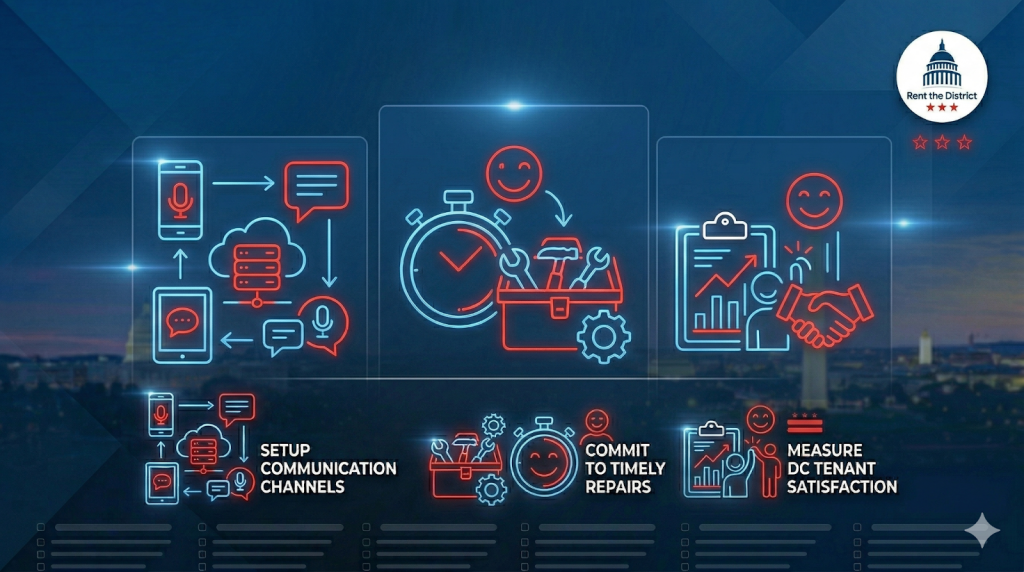
Before listing, it is worth asking a simple question. How will tenants reach you when something breaks?
And not just reach you, but get a response.
Maintenance responsiveness is one of the most consistent drivers of tenant satisfaction in DC. It is also one of the easiest things to underestimate when self-managing.
This is part of the broader conversation around self-managing a rental property in Washington DC, where the workload often looks manageable until it is not. Messages come in at inconvenient times. Repairs stack up. Follow-ups get missed.
Property managers tend to reduce this friction by having structured systems in place, and 24/7 monitoring for emergencies. Not because the tasks are complex individually, but because they repeat constantly.
Make Sure the Listing Reflects Reality
Photos, descriptions, amenities, these all shape expectations before a tenant ever walks through the door.
Listings that oversell tend to create shorter tenancies. Listings that accurately reflect the property tend to attract tenants who are more likely to stay.
This is not about being overly cautious. It is about alignment.
A tenant who knows exactly what they are getting is less likely to feel disappointed later. And that matters more than it seems.
Timing Matters More Than Most Landlords Expect
There is a window in DC where units lease faster. The peak rental season generally starts in June, and lasts through mid-September.
Listing outside that window is still possible, but expectations may need adjustment. Days on market may increase. Prices may be slightly less. Negotiation and concessions may become more common.
A delay of even a couple of weeks in preparing the property can push the listing into a slower period. That is where vacancy costs start to compound.
This is part of why preparation before listing matters so much. Timing is not fully controllable, but readiness is.
Where Property Managers Fit Into This
This is not about suggesting that every landlord needs a property manager.
But it is worth recognizing where they tend to make a difference.
Property managers help standardize all of the steps above. Licensing, inspections, pricing, communication, documentation, move-ins, turnovers, and move-outs. Not as one-off tasks, but as a repeatable process.
For landlords with one property, the value is often in reducing mental load and in DC, ensuring compliance with laws and regulations. For those with multiple properties, it becomes more about consistency.
Either way, the goal is the same. Fewer mistakes. Fewer surprises.
A Practical Bottom Line
Listing a rental property in Washington, DC is not complicated in theory. But it is detailed in practice.
The steps that happen before the listing goes live tend to determine how smooth the rest of the lease will be. Or how complicated.
For landlords who take the time to align licensing, inspections, pricing, and expectations upfront, the process tends to feel more predictable. For those who skip or rush these steps, the issues usually show up later.
Some Final Words
If preparing a property for listing feels more layered than expected, we often see landlords benefit from a structured, local approach. We focus on getting these early steps right so the rest of the process runs more smoothly. If it makes sense, we are always open to talking through how we handle that at Rent the District.
FAQs
Do landlords in DC need a license before renting a property?
Yes. All rental properties require at least a Basic Business License (BBL) and proper registration before being legally rented. Properties with two or more units may also require a Certificate of Occupancy. The DLCP providesa step-by-step guide to the BBL process.
Is a move-in inspection required in Washington, DC?
While not always framed as strictly mandatory, it is strongly expected and critical for handling security deposit disputes, or charging a tenant for damages during their lease term.
How much can a landlord charge for a security deposit in DC?
DC caps security deposits at one month’s rent, with strict rules on handling and returning the funds.
Is my property subject to rent control?
Most DC rental properties are subject to rent control by default. Exemptions exist for newer construction and qualifying small landlords, but those exemptions must be established properly. Placing a property in an LLC can affect exemption eligibility.
When is the best time to list a rental property in DC?
June through mid-September tend to produce the strongest demand and fastest leasing timelines.
Should landlords manage their own rental property in DC?
Some do successfully, but many find that compliance, communication, and maintenance demands add up quickly over time.